

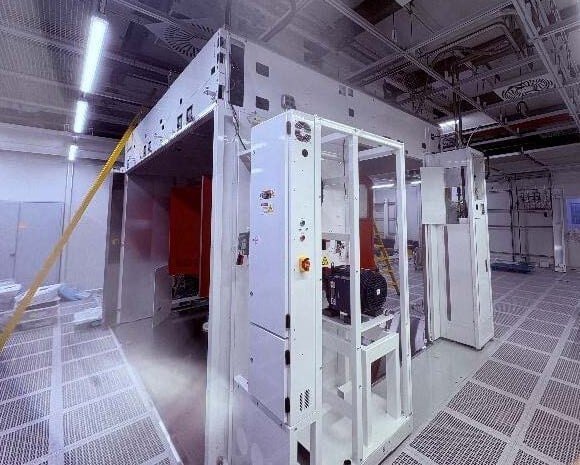
From Cleanroom to Crate: Preparing a Purion Ion Implanter for Transport
Discover how we deinstalled, rigged and packed an Axcelis Purion ion implanter within a controlled cleanroom environment for international relocation.
Updated on
Bringing a rapid thermal processing (RTP) furnace back into service requires a very specific kind of expertise.
When the tool heats wafers at 150°C per second, and the substrate contains latent phosphorus that ignites above 700°C without oxygen, the margin for error is effectively zero.
As part of a significant planned production ramp-up, our client needed to bring an AG Associates RTP furnace back into operational service.
We were contracted to carry out the full start-up and commissioning at their fabrication, taking the tool from installed and static to operational, validated, and ready for production.
Our lead engineer is also one of the very few experts in Europe with direct, hands-on experience of this specific class of tool, knowledge that goes back to its earliest iterations.
Here’s how we did it.
The AG Associates RTP furnace is a sophisticated thermal processing system capable of heating wafers from room temperature to 1,200°C at rates of up to 150°C per second.
That extreme ramp rate is central to its purpose. By heating so rapidly, the tool can repair surface damage on a wafer without disturbing the underlying substrate.
And it’s not a particularly straightforward tool to work with.
Rather than conventional thermocouples, which can't withstand sudden temperature surges of that magnitude, the system uses pyrometry, an optical technique that determines temperature by reading the colour of thermal radiation emitted from inside the chamber.
Every aspect of the tool demands a specific kind of knowledge to operate correctly. Which is why it was so important for us to get it right.
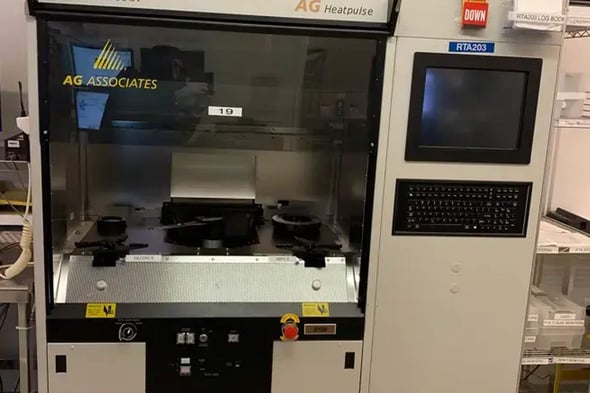
When our engineer arrived at our client’s facility, the tool had already been installed in position. Our job was to start it up and get it running.
As with any commissioning project, however, the first step was a thorough inspection of the tool in its installed state.
That inspection revealed damage.
Several quartz and borosilicate glass components had been broken or compromised in transit. These are precision components, integral to the optical and thermal performance of the system. And they needed to be replaced before commissioning could proceed.
With lead times from suppliers running to several weeks, replacement components were arranged to be manufactured locally, keeping the project moving without an extended wait on transatlantic supply chains.
We quickly discovered that the wafer-handling robot (the automated system responsible for picking up wafers, moving them through the process chamber, and placing them accurately) also was not functioning on arrival.
Our engineer pulled the robot out entirely and rebuilt it on a bench before reinstalling it.
However, the rebuild process caused the system to lose all of its stored positional data. Every position the robot needed to know in order to operate (for example, how to pick up a wafer, how to traverse the chamber, where to set it down) had to be re-taught from scratch.
This was a painstaking, exacting process. Each position had to be defined individually, verified, and locked in. But on a tool of this sensitivity, where wafer placement tolerances are tight, and errors can compromise the process or damage the substrate, there is no room for approximation.
The AG Associates RTP system uses a cold-wall design, meaning the surrounding chamber walls are actively water-cooled throughout operation.
When the water circuit was brought online, it became clear there were leaks at multiple points across the oven assembly.
Our engineer isolated the water supply, cleaned and dried the assembly, and carried out a full diagnostic. Degraded seals and gaskets were identified throughout.
Replacement parts were ordered, and our engineer carried out a complete rebuild of the water-cooling assembly, restoring integrity across the system before commissioning could continue.
With the mechanical and structural work complete, the focus turned to bringing the heating system online and verifying the pyrometry.
This meant confirming that:
That 700°C limit is not arbitrary. Our client’s cleanroom processes indium phosphide (which contains latent phosphorus). Above 700°C, that phosphorus is released. And unlike most combustible substances, phosphorus does not require oxygen to ignite, making it extremely difficult to extinguish once released.
Temperature control on this tool, therefore, is not solely a process performance requirement. It is a safety-critical one. Verifying that the system responded accurately and consistently to temperature commands (and that the upper limit held under real operating conditions) was the final and defining stage of commissioning.
The tool passed. And our client’s facility had a fully operational, validated RTP furnace, ready to support their production ramp-up.
We’ve supported semiconductor OEMs and end users to move, install and commission diffusion equipment since 1991.
From single-tool commissioning to full cleanroom relocations, our specialist engineers bring the depth of knowledge that complex, safety-critical equipment demands.
Find out more about IES's etch equipment support services here.
Discover how we deinstalled, rigged and packed an Axcelis Purion ion implanter within a controlled cleanroom environment for international relocation.
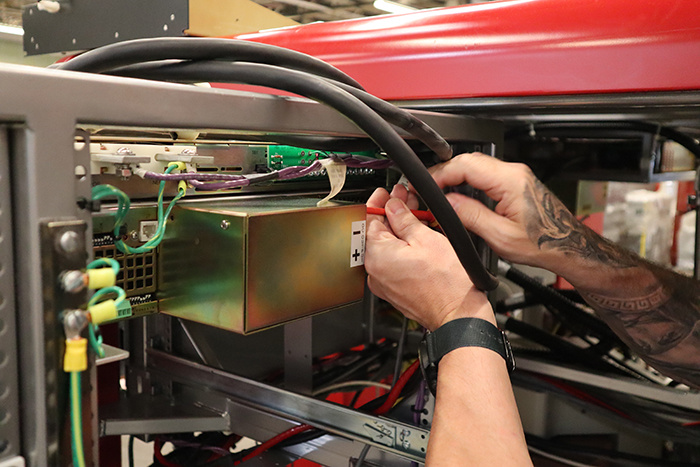
Discover how we helped our client harvest the semiconductor parts they needed from a secondhand Axcelis Optima Implanter to support a legacy tool.
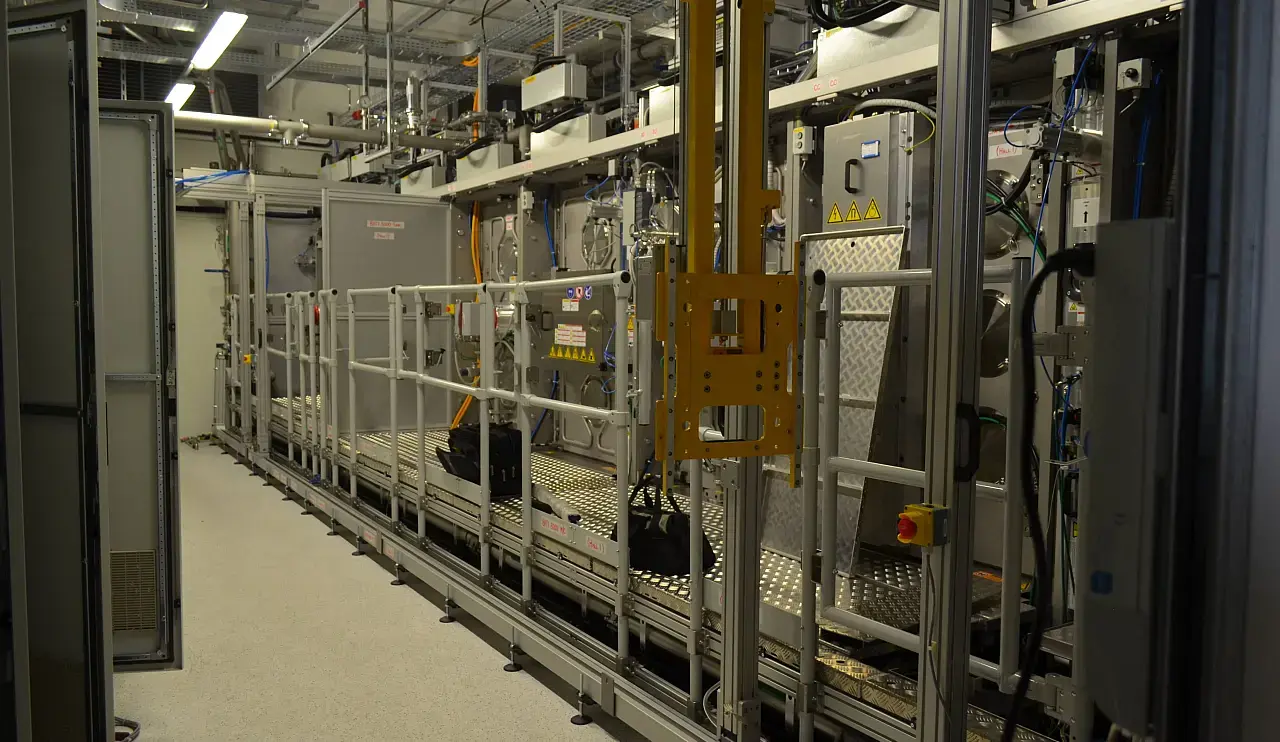
Discover how we successfully relocated a custom-built, one-of-a-kind tool 400 miles across borders.