 Ben Halle
/Logos%20and%20Icons/Axcelis-Logo.jpg?width=1200&length=1200&name=Axcelis-Logo.jpg)
/Logos%20and%20Icons/Applied-Materials-Logo.jpg?width=1200&length=1200&name=Applied-Materials-Logo.jpg)
/Logos%20and%20Icons/Varian-Logo.jpg?width=1200&length=1200&name=Varian-Logo.jpg)


9 Benefits of Working with a Field Service Engineer (FSE)
When you’re working in a fast-paced, high-technology environment, having easy access to highly skilled, on-demand experts isn’t just a bonus. It’s a...
Legacy ion implantation platforms remain a fixture in fabs around the world, and there’s a thriving ecosystem which supports them.
Figures show that more than 46% of mature-node fabs rely on refurbished ion implanters to control capital expenditure, reducing new equipment procurement by 32% in legacy manufacturing.
Leaving the stats aside, in my own role, I’ve seen the growing strength in demand for legacy implanter installation and legacy parts harvesting.
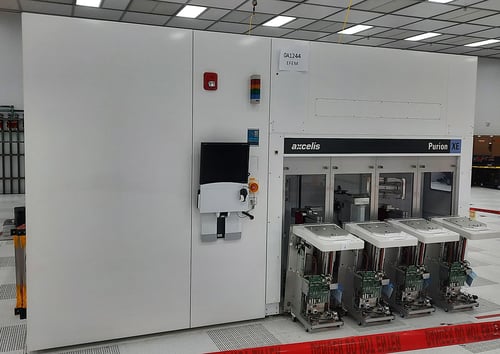
Systems from platforms such as Axcelis, Applied Materials and Varian continue to support mature-node logic, power devices, MEMS, sensors, and specialty applications, remaining widely deployed across Europe, North America and Asia.
Rather than being outdated equipment, legacy ion implantation systems are strategic production assets. But while OEM manuals generally offer prescriptive steps, they don’t cover all eventualities in installation environments.
Many legacy ion implantation systems still in operation today were first installed 15-25 years ago. The OEM manuals that accompany tools such as the Axcelis GSD, Applied Materials 9500XR, or Varian E500 were written for their original environments.
These manuals often assume original site infrastructure and utility capacity, specific cleanroom ceiling heights and subfab layouts, and possess factory-standard tool configurations with no modifications.
Today’s reality is very different. Legacy tools are routinely rebuilt using hybrid configurations, often combining components from multiple tool generations. They are also relocated across countries with different regulatory frameworks, being reinstalled after decommissioning and storage.
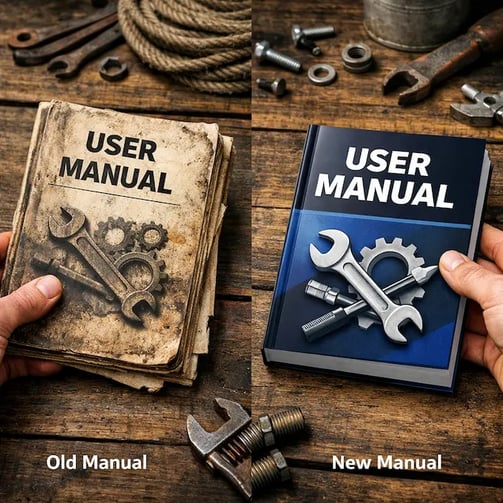
The result is that OEM manuals of legacy tools are not a playbook on how to overcome the challenges engineers actually face when installing them in the field.
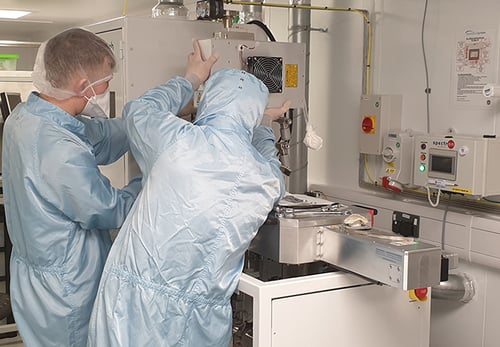
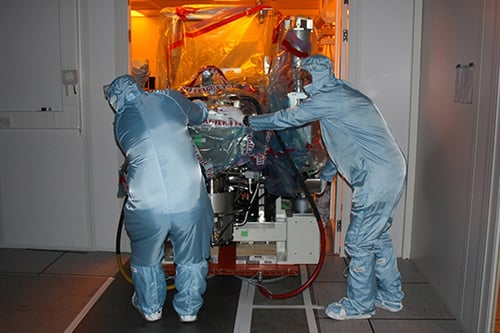
Moving large beamline assemblies through constrained access routes, managing vibration isolation in older or retrofitted fabs, and handling obsolete PLCs or unsupported control systems. It is these complex, real-world conditions that most legacy tool installation projects involve. In legacy installation environments, understanding tool-specific nuances is also part of solving the puzzle.
Beyond general limitations, OEM documentation omits critical, platform-specific nuances that impact installation planning and execution.
Axcelis GSD HE/VHE systems are a case in point. These tools require careful handling of large accelerator columns, with components that introduce substantial floor loading considerations. Sometimes these factors are underrepresented in standard documentation.
Varian VIISta systems can vary significantly depending on their revision history. Differences in vacuum pump configurations, for instance, can affect subfab layout, utility connections, and installation sequencing.
High-current platforms such as the Applied Materials Quantum and Applied Materials 9500XR may include variations in gas cabinet design and toxic gas monitoring systems that need aligning with modern safety standards: This requires additional engineering input not covered in OEM manuals.
Some batch systems like the Axcelis 8200 demand precise mechanical alignment at the end station. While manuals provide nominal tolerances, they might not reflect the practical adjustments needed to achieve process-ready performance after relocation.
The overriding fact is that these nuances are typically learned through engineering experience; not documentation.
Aside from the obvious advantage of a lower upfront cost, legacy tools can offer a faster time-to-production in some cases, as well as the benefit of proven process stability and support for a wide operating range.
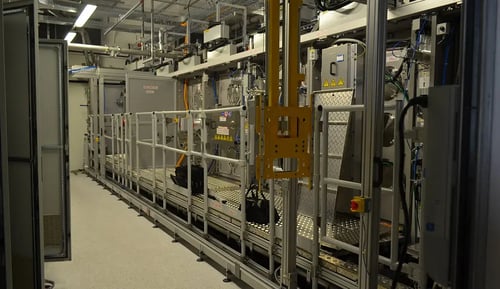
The caveat to these upsides is that legacy implanter tools are resource-intensive, and installation requires specialist knowledge of utilities integration and prerequisite conditions; from high-capacity chilled water systems to exhaust systems compatible with hazardous gas abatement.
Modern facilities often operate with different infrastructure standards or capacity limits. Safety thresholds and monitoring systems may evolve. OEM manuals typically do not address how to adapt these older requirements to newer environments.
In the area of compliance, there are also careful considerations to be made. Regulations are predated by original documentation of many legacy tools. There is the potential for significant conformity gaps that must be addressed prior to, during, and after installation.
When relocating or modifying tools originally built decades ago, engineers must consider Machinery Directive conformity when systems have been altered, PUWER (Provision and Use of Work Equipment Regulations) requirements, electromagnetic field (EMF) testing for high-energy platforms, and alignment with current UKCA or CE marking expectations.
There’s no substitute for engineers with tool-specific experience when it comes to installing legacy semiconductor tools.

Detailed site surveys are essential, with some legacy implanters requiring floor loading analysis, vibration analysis and utility capacity validation at the installation site. Method statements are produced to demonstrate installation logic such as beamline alignment tolerances, vacuum system sequencing and integration testing requirements.
Installation engineers with the right profile can adapt procedures based on prior installs of the same platforms; not just the manual. There is also a need for conformity assessments for compliance and risk mitigation, including gap analysis followed by PUWER and EMF testing.
While headlines focus on advanced 3nm and 2nm nodes (3nm, 2nm), mature nodes still dominate real-world demand, accounting for 38.6% of front-end equipment market share in 2025. Despite the move of leading foundries towards cutting-edge nodes, mature node demand remains stable or growing in key sectors.
The value, availability and supply chain resilience offered by legacy semiconductor tools means that for many manufacturers, they continue to represent a highly viable investment.
Navigating potential installation pitfalls with the right technical knowledge and expertise is crucial to assuring that ‘age is just a number’.
When you’re working in a fast-paced, high-technology environment, having easy access to highly skilled, on-demand experts isn’t just a bonus. It’s a...
Relocating a factory is a bit like building a machine; all the cogs need to fit and work together. If one part stops working, the whole thing comes...

IES offers a variety of courses that cover a wide range of topics central to the semiconductor industry.