Low Voltage Directive Guide
The Low Voltage Directive 2014/35/EU, also known as the LVD, is a set of product safety requirements that apply to electrical equipment in the...
8 min read
.jpeg?width=800&height=533&name=Machanical%20Machinery%20(1).jpeg)
Regulation (EU) 2023/1230 is the EU's new machinery safety law. Adopted by the European Parliament and the Council on the 14th of June 2023, it replaces the Machinery Directive 2006/42/EC as of the 20th of January 2027.
It’s also one of several directives that are covered by the CE marking regulations. That means demonstrating compliance with the Regulation is a mandatory part of the CE marking process for most products, equipment, and machinery sold within the European Economic Area (EEA).
This guide explains what the Machinery Regulation covers, who it applies to, what's changed from the old Directive, what conformity assessment and documentation are required, and how it fits into the wider CE marking framework.
Read the full Regulation (EU) 2023/1230 here.
In short, the Regulation sets the health and safety bar that machinery, related products and partly completed machinery must clear before they can be sold or used anywhere in the EU.
The goal is straightforward: keep people safe, especially the consumers and professional workers who use this equipment. And, where it's relevant, protect animals, property and the environment.
So what counts as "machinery"? At its core, it's any assembly of linked, moving parts, joined together for a specific job, and powered by something other than a person or animal pushing, pulling or lifting it directly. The Regulation stretches that core idea to also cover:
Alongside machinery itself, the Regulation covers the following categories of related products:
Not everything falls in scope. The Regulation specifically excludes:
The Machinery Regulation came into force on 19 July 2023, but doesn't become fully applicable until 20 January 2027.
That's a transition period of roughly 42 months, giving manufacturers, notified bodies and national authorities time to prepare before the old Directive is repealed and the new Regulation takes over.
Here’s what changes:
It becomes a Regulation, not a Directive
The old Directive required transposition into the national law of each Member State. The Machinery Regulation applies directly and identically across the whole EU from the moment it takes effect, with no national transposition step in between.
New rules for machine learning and self-evolving machinery
Annex I now lists two entirely new categories that require the strictest level of conformity assessment:
The Regulation's general risk-assessment principles also now require manufacturers to consider hazards that could emerge over a machine's lifetime as a foreseeable result of this self-evolving behaviour.
New cybersecurity requirements
A new "protection against corruption" requirement means machinery must be designed so that connecting another device doesn't create a hazardous situation.
Hardware and software critical to compliance must be protected against accidental or intentional corruption, and the machinery must be able to identify its own safety-critical software and log evidence of legitimate or illegitimate intervention.
New control system requirements for autonomous machinery
Control systems for machinery with self-evolving or autonomous behaviour must not let it act beyond its defined task and movement space, must record data on safety-related decisions (retained for at least a year), and must always allow the machine to be corrected to maintain its inherent safety.
Human-machine interaction is now built into the ergonomics requirements
Where machinery is designed to operate with varying levels of autonomy, its human-machine interface must be adapted to the operators using it. And, where relevant, the machine should be able to respond to people appropriately and communicate its planned actions in a way they can understand.
Documentation can now be digital by default
Instructions for use, assembly instructions, and EU declarations of conformity or incorporation can all be provided digitally as standard, rather than defaulting to paper.
Manufacturers must mark how to access them, allow them to be printed, downloaded and saved, and keep them available online for at least 10 years after the product is placed on the market.
Traceability for safety software
Manufacturers must now keep a tracing log of any safety software versions uploaded after the machinery has been placed on the market or put into service, retained for five years, so conformity can be demonstrated on request.
"Substantial modification" is now formally defined
The Regulation sets out, for the first time, exactly what counts as a substantial modification and the consequences of making one.
Where a physical or digital change creates a new hazard or increases an existing risk in a way that needs extra guards, protective devices, or additional stability or strength measures, whoever carries it out is treated as the manufacturer for that machinery, and takes on the full set of manufacturer obligations, including conformity assessment and the EU Declaration of Conformity.
Importers and distributors now have their own formal obligations
In line with the EU's New Legislative Framework approach to product legislation, the Regulation sets out explicit duties for importers and distributors, rather than treating machinery compliance as a manufacturer-only concern.
The Machinery Regulation places obligations on:
Anyone who carries out a substantial modification (a physical or digital change not foreseen by the manufacturer that creates a new hazard or increases an existing risk, requiring extra guards, protective devices, or additional stability or strength measures) is also treated as a manufacturer for that machinery. The exception is a non-professional user modifying their own machinery for their own use, who is not considered a manufacturer under the Regulation.
Key responsibilities for manufacturers include:
Northern Ireland
Under the Windsor Framework, certain EU product rules continue to apply directly in Northern Ireland. The Machinery Regulation is one of these rules, and will apply directly in Northern Ireland from 20 January 2027.
Great Britain
Machinery in Great Britain is currently governed by the UK's own Supply of Machinery (Safety) Regulations 2008. However, the UK Government has confirmed it will continue to recognise CE marking in Great Britain, and that machinery CE-marked to the new Regulation can still be placed on the GB market without separate UKCA certification.
Annex I splits machinery and related products into two tiers, and the conformity assessment route depends on which one a product falls into.
Annex I, Part A, the highest-risk categories, currently covers:
For Part A categories, the manufacturer must use one of three routes, all of which involve a notified body:
Annex I, Part B is a longer list of 23 categories, covering equipment such as:
For Part B categories, manufacturers can choose:
If any of the above are provided digitally, the manufacturer must mark how to access them, allow users to print, download and save them, and keep them accessible online for at least 10 years.
A free paper copy must still be sent within one month if requested at the time of purchase, and safety information for non-professional users must always be supplied on paper.
Many machines fall under more than one EU directive. And the Machinery Regulation doesn’t cover all safety or performance aspects of a product.
For example, equipment may also fall under the Low Voltage Directive or the EMC Directive, as well as the Machinery Regulation.
In these cases, the manufacturer must:
Note that, the CE mark does not indicate conformity with a single directive. It represents compliance with all EU legislation applicable to the product.

Our start-to-finish Machinery Safety Testing service for large and medium-sized capital equipment covers every step of the process, from testing against the essential health and safety requirements to compiling your technical documentation and addressing remedial actions.
Head to our Machinery Safety Testing service page here to find out more.
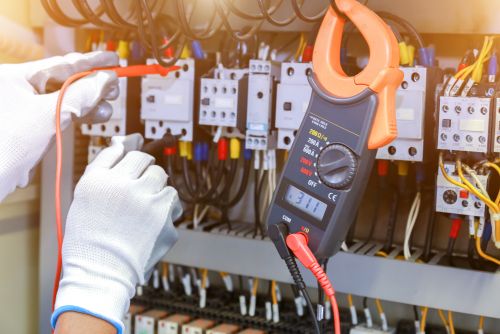
The Low Voltage Directive 2014/35/EU, also known as the LVD, is a set of product safety requirements that apply to electrical equipment in the...

If your business owns, operates or controls work equipment, you must comply with the Provision and Use of Work Equipment Regulations 1998 (frequently...
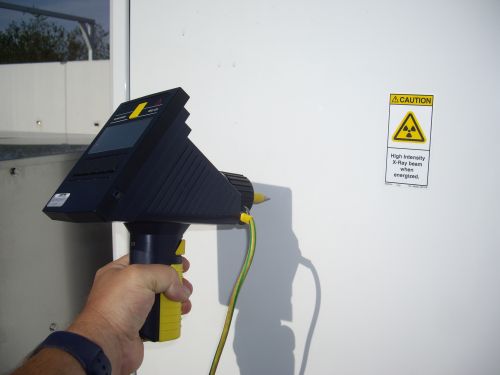
The Electromagnetic Compatibility (EMC) Directive 2014/30/EU is one of the key pieces of legislation that governs the placement of electrical and...