Plasma Cleaning and Polymerisation Tool (cluster system)
What is the Plasma Cleaning and Polymerisation Tool (Cluster System)?
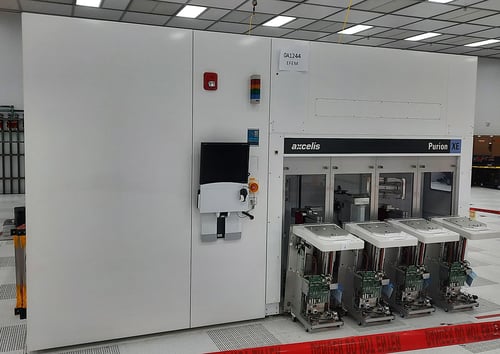
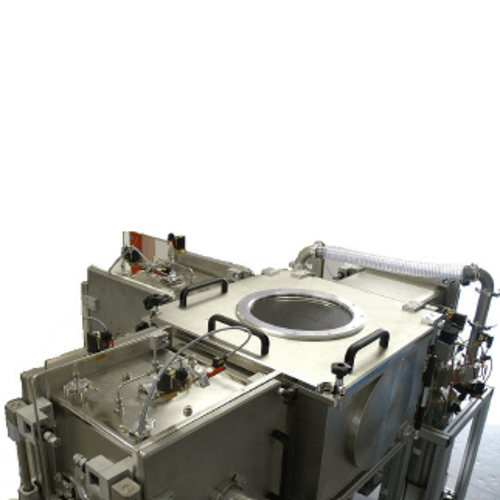
The Plasma Cleaning and Polymerisation Tool (Cluster System) is a robotic-powered, multi-chamber system designed for complex coating processes in a low-pressure environment. It offers precise surface treatment capabilities suitable for advanced applications requiring high throughput and flexibility. IES is an equipment partner for PPS (Plasma Parylene Systems), supplying, installing, and supporting the Cluster System for customers across the UK.
How does the system enable seamless, high-throughput processing?
The system's modular design allows for customisation to meet specific process requirements. The robotic-driven cluster layout allows seamless transitions between cleaning, polymerisation, and coating stages — without breaking vacuum — facilitating high-throughput and contamination-minimised workflows.
What plasma processing flexibility does it offer?
The availability of dual-frequency plasma systems enables fine-tuned surface treatment or coating processes tailored to different substrate materials and deposition goals. With up to nine gas channels and configurable substrate holders, the system supports advanced, multi-step process sequences and parameter optimisation across chambers.
What is it typically used for?
The Cluster System is well suited to R&D and process development, where its flexibility — multi-chamber, many gas channels, robotic handling — makes it ideal for labs developing new plasma polymer recipes or combined plasma-clean and plasma-deposition processes, with the same system supporting pilot production once a process has been developed. It's also used for advanced coating and barrier applications, such as depositing plasma-polymerised barrier films for chemical resistance or moisture and ion barriers, including hybrid strategies combining plasma polymer with parylene coating.
Where can I buy or get support for the Cluster System in the UK?
As an equipment partner for PPS, IES provides UK-based sales, installation, and engineering support for the Cluster System and the wider PPS parylene and plasma coating portfolio.
Key Features:
- Seamless Automation and Process Continuity The robotic-driven cluster layout allows seamless transitions between cleaning, polymerisation, and coating stages—without breaking vacuum—facilitating high-throughput and contamination-minimized workflows.
- Versatile Plasma Processing The availability of dual-frequency plasma systems enables fine-tuned surface treatment or coating processes tailored to different substrate materials and deposition goals.
- Precision Control Over Gas and Process Parameters With up to nine gas channels and configurable substrate holders, the system supports advanced, multi-step process sequences and parameter optimisation across chambers.
- Efficient Substrate Handling with Vacuum Integrity The air-lock robot ensures smooth loading and unloading of substrates, protecting delicate coatings or surfaces from contamination and throughput delays.
- Robust Vacuum Architecture for Reliable Operation Multiple pumps and established vacuum interfaces contribute to steady vacuum maintenance—critical for low-pressure plasma and parylene-based applications.
Technical Data:
- Dimensions: L: 2000mm W: 1800mm H: 2000mm
- Weight: ~ 320 KG
- Volume: 50 litres
- 3 process chambers: VA L:300 W:300 H:300
- Plasma source: 2,45 GHz, 1200 Watt / 13,56 MHz, 600 Watt
- Inclusive: 3x3 gas channels (gas distribution system inside the process chamber)
- Additionally: air lock robot, example substrate holder for air lock
- Substrate holder (optional): Aluminum, customized design possible
- Vacuum connection: DN 63 ISO-KF
- Venting: electromagnetic solenoid valve
- 3 Pump systems: 40m³/h
- Chamber door: Maintenance chamber doors
Applications:
- Complex, Multi-Step Surface Treatment Very suited for processes that require both cleaning (plasma cleaning) and polymer deposition (plasma polymerization) in the same system.Good for workflows where you don’t want to break vacuum between steps — this helps avoid contamination and improves process control.
- High-Reliability Electronics & Semiconductor Semiconductor substrates that need very clean surfaces (oxide removal, organic residue removal) before further processing. Plasma cleaning helps with that. Plasma polymerization can then deposit very thin functional polymer layers.Microelectronic / MEMS devices where surface functionalisation (e.g., adding a polymer layer) is required for reliability, passivation, or to tailor surface properties.
- Functional / Interface Coatings Plasma polymerisation can deposit “functional” polymer films (not just parylene) — these could be hydrophilic, hydrophobic, anti-static, or adhesion-promoting. Plasma Parylene (via their Alpha Plasma tech) explicitly supports plasma polymerisation to form functional thin films. Useful for interface engineering: e.g., before bonding, or to improve adhesion of another layer (e.g. parylene or other coating).
- Medical Devices Cleaning of device surfaces before sterilisation or coating (e.g., removing organics, residues) via plasma cleaning. Deposition of ultra-thin, biocompatible plasma polymers for medical implants, microfluidic devices, sensors, or micro-needles.
- Microfluidics / MEMS / Nanotechnology In microfluidic devices, you might want to functionalize channel surfaces (with hydrophilic or hydrophobic plasma-polymer layers) to control fluid flow, cell adhesion, or molecule binding. MEMS sensors or microstructures that need conformal, functional polymer films for passivation, as well as very clean starting surfaces.
- Research & Development / Process Development Because of its flexibility (multi-chamber, many gas channels, robotic handling), it’s ideal for R&D labs that are developing new plasma polymer recipes or combined plasma-clean + plasma-deposition processes. Pilot production as well: once a process is developed, the same system can be used for scale-up.
- Advanced Coating / Barrier Applications Deposition of barrier films (e.g., plasma-polymerised films) to provide chemical resistance, barrier against moisture or ions, or to reduce permeability. Could be especially useful where a purely parylene coating is not ideal, or where a hybrid strategy is needed (e.g., plasma polymer + parylene).